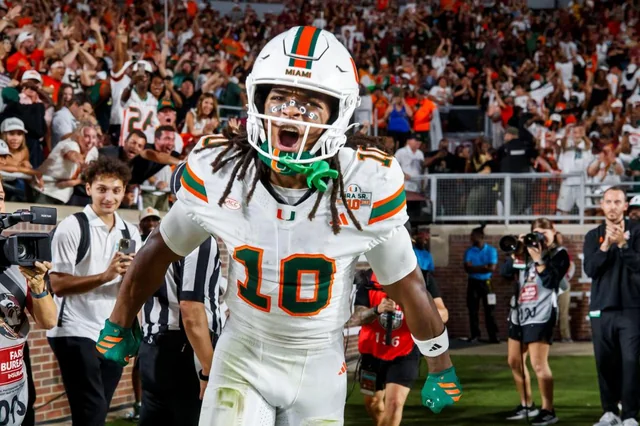
Did the media get Miami into the playoff?
That question already flies around group chats from South Bend to South Florida. Notre Dame and Miami both finished 10-2. Miami owned the head-to-head win, 27–24 at Hard Rock in Week 1, yet the CFP Committee released every weekly ranking with Notre Dame in front of Miami, at one point with an eight-spot gap. Only on Selection Sunday did Miami finally jump the Irish, sliding into the field at No. 10, with Notre Dame stuck at No. 11 as the first at-large team out.
During that last week, national and local voices turned Miami into a cause. Greg Cote wrote that the Hurricanes “proved [they] belong in the CFP” and argued for Miami over Notre Dame after the rout of Pitt. Yahoo Sports, CBS and others framed a simple message: same record, head-to-head edge, no conference title game safety net for either side, so Miami deserved the nod. Talk shows hammered “head-to-head matters” all week.
Social media got even louder. Polls, graphics, and fan threads pushed the head-to-head card and mocked the committee for ignoring it in earlier rankings. Canes-centered sites tracked every twist, then celebrated once the bracket dropped and timelines flooded with Miami memes and Notre Dame tears.
Then, you had the ACC’s very public push. League accounts highlighted a side-by-side Miami–Notre Dame graphic and replayed that Week 1 game, while Commissioner Jim Phillips defended advocacy for member schools. Notre Dame’s athletic director, Pete Bevacqua, now claims that campaign caused “permanent damage” to the relationship with the conference and helped shove the Irish out of the field.
So did the media get Miami in, or did the media finally force everyone to acknowledge what the field already showed?
The committee chair admitted that only when BYU’s loss pushed Miami and Notre Dame “side by side” again did members fully weigh the head-to-head result and re-rank the two. That comment matters. It suggests in-season momentum carried Notre Dame, and only at the end did the committee reset the board and treat the debate like a fresh comparison. At that moment, every show, column and viral clip hammered the same talking point: you cannot justify ignoring a head-to-head win when résumés look similar.
Media and social pressure probably did not “hand” Miami a golden ticket. The playoff format, the BYU loss, and a September win gave the committee all the cover required. But the noise around the Canes absolutely changed the temperature of the room. It let the world know the public opinion on Miami vs. Notre Dame, and that spotlight forced the committee to either honor its own head-to-head language or explain why it ignored it.
Comments