A proposed long-term agreement between the University of Miami and Coral Gables includes a reference to a future football operations building, placing another potential athletics project inside a much larger campus plan. The city has not approved the agreement, and the reference does not amount to a construction announcement, according to Jayden Gonzalez and Sebastian Font of The Miami Hurricane.
The distinction is important. Miami has not released a design, budget, construction site or opening date for a football building. The new information is that the project appears in a formal land-use proposal rather than only in fan discussion. It gives the program a documented direction while leaving every major execution question open.
Coral Gables lists the matter as file 26-1069, an agenda-ready package involving amendments to UM’s development agreement, comprehensive plan, zoning code and campus master plan, according to the city’s legislative record. The breadth of that package means the football reference should be read as one possible piece of a 30-year framework, not as a stand-alone facilities vote.
The proposal would raise the undergraduate enrollment threshold that triggers additional city approval from 13,000 to 17,500 and would rezone three properties near Titanic Brewery from commercial low-rise use to the university campus category, according to Gonzalez and Font. It also contemplates transferring 5.52 acres to the city for a public park.
Those provisions matter to athletics because physical growth and institutional revenue affect what UM can consider over time. A football operations building would have to compete with academic, medical and public-space priorities before it could move from planning language to a finished facility. Approval of the agreement would create room for decisions; it would not make every listed possibility inevitable.
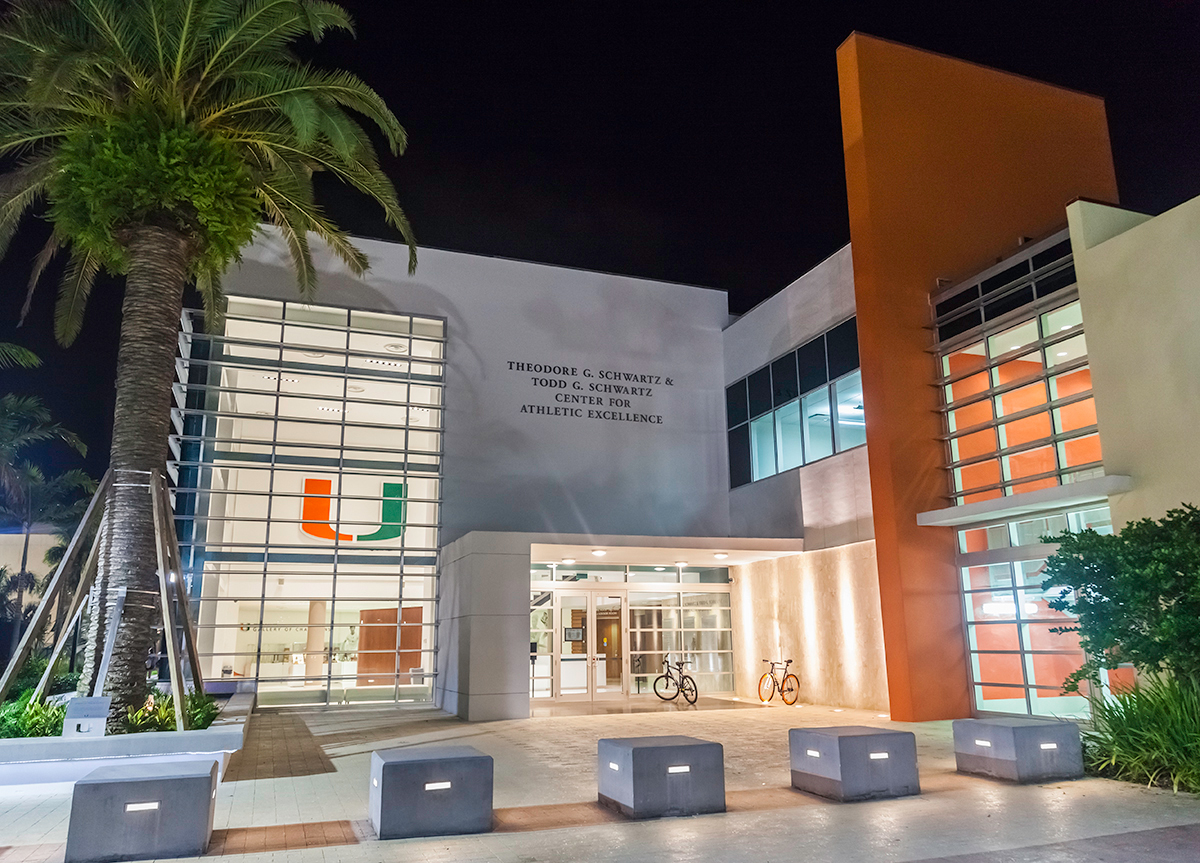
Miami already operates the Schwartz Center for Athletic Excellence and the Carol Soffer Indoor Practice Facility, so the useful question is not whether the football program has a place to work. A dedicated operations building could consolidate coaching offices, meeting rooms, sports science, recovery, nutrition and recruiting functions around the daily football schedule. The value would come from workflow and capacity, not simply from adding another exterior to a facilities tour.
The broader context also separates this proposal from the facilities arms race that often reduces every project to recruiting photos. Mario Cristobal’s program needs practical space for a large roster, an expanding support staff and year-round player development. A well-planned building could shorten movement between meetings, treatment, lifting and practice while giving different units more room to operate at the same time.
The city process remains the controlling part of the story. The legislative record lists the item as agenda ready but shows no final action or enactment date. Any public timeline for a football building would need to follow approval, university funding decisions and a more specific project announcement.
For now, Miami fans have a legitimate facilities development to watch and a reason to avoid turning it into a groundbreaking ceremony before one exists. The proposal shows that UM wants flexibility for future athletics investment. The next meaningful news will be a city action or a university plan that supplies the details this document does not.
Comments