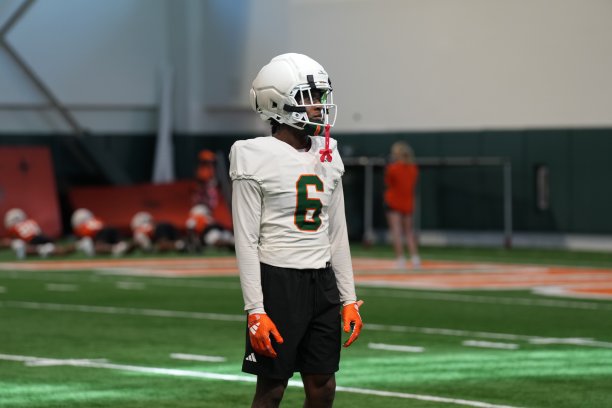
Miami should welcome college football’s experimental targeting ladder because it punishes the dangerous play in front of everyone without automatically making the next opponent part of the penalty.
The National Football Foundation and College Football Officiating detailed the 2026 structure this week. Every upheld targeting foul still disqualifies the player for the rest of the current game. A first foul no longer produces a carryover absence, a second adds a first-half suspension for the next game and a third or later foul brings a full-game suspension.
The distinction is sensible. One bad strike can happen because a defender lowers his aiming point too late, an offensive player changes level or a fast collision defeats perfect technique. A repeat pattern is different. The new ladder recognizes that difference without weakening the immediate protection for the player who absorbed the hit.
Miami knows the cost of the old rule. Patrick Previty of Canes Warning noted that Xavier Lucas missed the first half of the national championship game after a fourth-quarter targeting ejection against Ole Miss. Under the 2026 rule, his first foul of the season would have ended his semifinal but not affected his eligibility against Indiana.
Nobody can prove that one half changed the championship result. Miami still had to defend, tackle and create offense for four quarters. The example does show the strange reach of the previous penalty. Indiana received a lineup advantage for a foul committed against Ole Miss, while the semifinal opponent saw Lucas removed for the closing minutes in which the violation occurred.
The new approach should not make Miami’s defensive backs less careful. Lucas, Bryce Fitzgerald and the rest of the secondary still lose the current game when targeting is upheld. The defense also pays immediately when an ejection forces backups into unfamiliar combinations. Hetherman’s staff has every incentive to coach proper strike zones, head position and leverage.
The escalating consequences add a useful accountability measure. A second foul demonstrates that the first correction did not hold, so the next-game suspension returns. A third creates a full-game absence. Conferences can consult the national coordinator on repeat cases, which supplies a review path when earlier decisions appear clearly wrong without turning every call into an automatic appeal.
Miami’s responsibility is to track the ladder before it becomes a crisis. Coaches should know which defenders have a prior foul, adjust practice emphasis and make the risk explicit. A player carrying one strike cannot approach a high receiver or sliding quarterback as if the history is irrelevant. The first-foul relief only works if teams treat repetition seriously.
CanesInSight’s recent account of Lucas’ camp comments emphasized Miami’s depth at outside cornerback. Depth remains important under the new rule because an ejected starter is still gone for the day. The difference is that the staff can prepare for the next opponent with its normal roster unless the player has shown a repeat problem.
Player safety and proportional discipline do not have to oppose each other. The 2026 rule removes the offender, preserves the 15-yard consequence and becomes harsher when behavior repeats. Miami experienced the most awkward part of the old carryover system on the largest stage. It should prefer a ladder that punishes the actual game first and reserves future suspensions for a pattern.
Comments