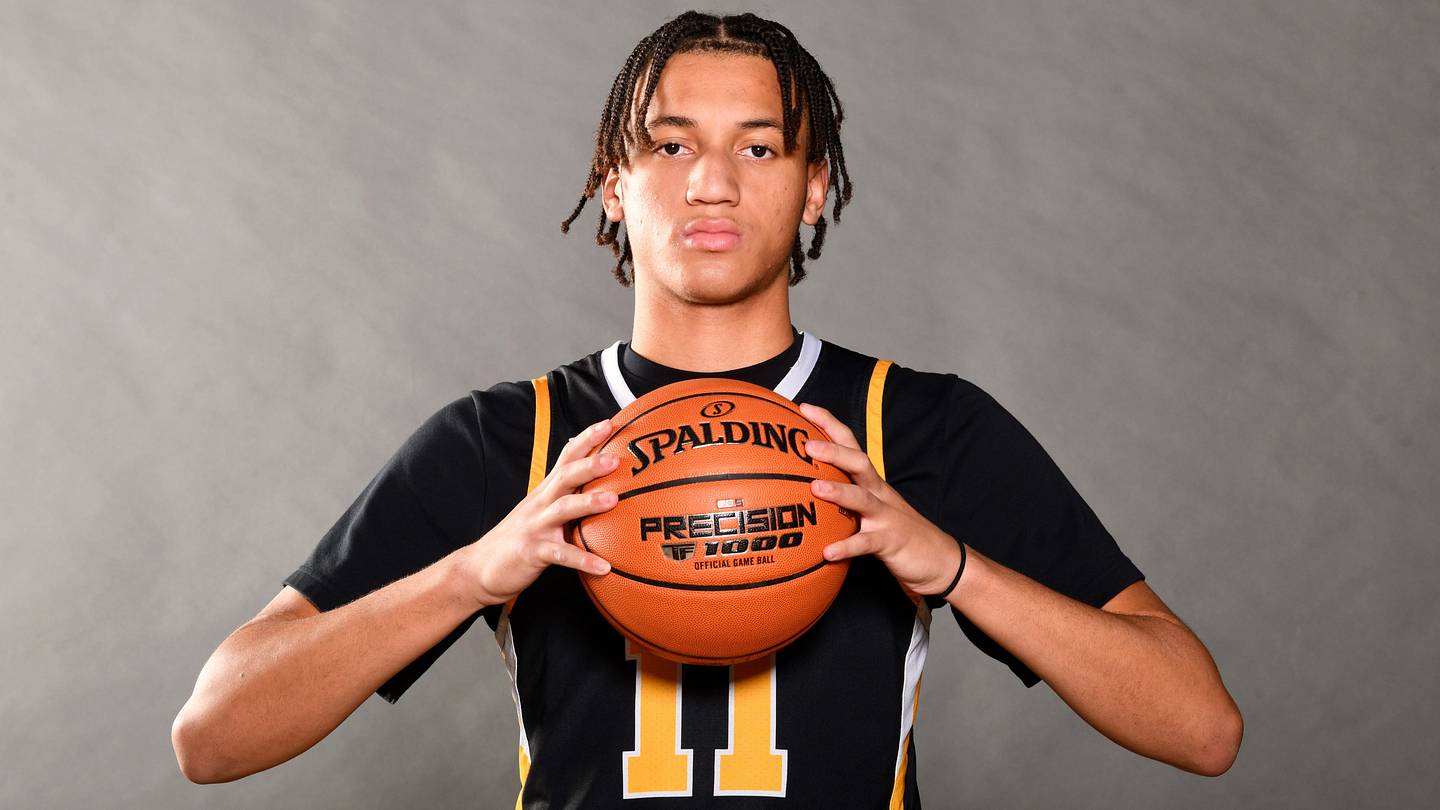
Miami’s offer to 2028 wing Mason Collins is most useful as a window into Jai Lucas’ long-term roster plan. The offer is not new and does not make the Hurricanes a favorite. It shows Lucas is identifying size, passing and lineup flexibility early instead of waiting for the portal to solve every future need.
Collins announced the Miami offer July 22, adding the Hurricanes to a recruitment that includes Florida State, NC State, Notre Dame, South Carolina, Syracuse, Georgetown and Villanova. The 247Sports Composite rated him No. 9 overall and No. 5 among small forwards at the time.
The ranking draws attention, but the statistical shape explains Miami’s interest. Collins averaged 17.2 points, 11.8 rebounds, 4.3 assists and 3.1 blocks for The Tatnall School. A 6-foot-6 player producing in all four categories can support several lineup types instead of occupying one narrow role.
Lucas has built his early Miami rosters around players who can handle more than one assignment. A large wing who rebounds can let a coach play smaller without becoming soft. A forward who passes can keep the offense moving when guards are pressured. Shot blocking from the wing creates defensive flexibility without asking a center to erase every mistake.
The development pitch cannot stop at versatility. Collins and his family will want to know which skills Miami plans to sharpen first. His father, Mardy Collins, played at Temple and became a first-round NBA draft pick. His mother, Ariana Moore, played at Temple and works in South Carolina women’s basketball operations. His brother Madden led American in scoring as a freshman.
A family with that background will recognize empty promises. Miami needs to explain how Collins’ handle would be developed, how his shot mechanics fit the staff’s offense and how strength work would prepare him to defend college forwards. A clear plan will matter more than telling him he can play anywhere.
Early offers also create a relationship test for Lucas. The 2028 cycle leaves enough time for staffs to change, rankings to move and new programs to enter. Miami must stay present without recruiting Collins like a finished product. The best long-term approach combines consistent contact with honest updates about his growth and the future roster.
His summer production supports the multi-skill argument. Collins averaged 13.5 points, 5.5 rebounds and 4.3 assists for Team CP3 on the Nike EYBL circuit. The lower rebound total in a different setting does not erase his high school work. It shows he can contribute as a passer when a talented team does not need every possession to run through him.
Miami should keep recruiting pure shooters, lead guards and traditional centers. Collins represents the connector who can make those specialists fit together. The offer says Lucas wants a 2028 class with more than star ratings. It points toward a roster in which size and skill overlap, and the next two years will show whether Miami can sell that vision as precisely as it identified it.
Comments