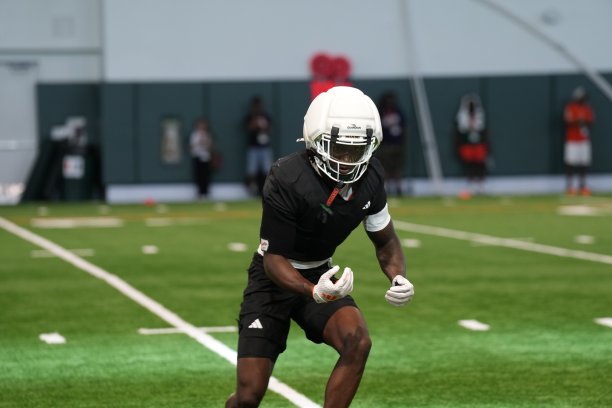
OJ Frederique’s added weight can help Miami solve a problem that begins before the ball reaches his coverage assignment. The cornerback says he now sits between 195 and 200 pounds, giving him more strength to handle the blocks and tackles that decide whether an outside run gains four yards or 40.
Frederique said he feels stronger and faster and wants to become more physical in run support, Trinton Breeze of CanesInSight reported after Friday’s practice. His goal is different from simply collecting more interceptions. It can change how defensive coordinator Corey Hetherman structures the entire edge of his defense.
A corner who holds up against the run allows the safety to remain patient. If Frederique can defeat a receiver’s block, force the ball inside and finish tackles, Miami does not have to spin a safety downhill at the first hint of motion. The patience preserves disguise, protects the middle of the field and makes play-action less effective.
The weight gain matters only if Frederique keeps his movement. Cornerback remains a speed position. Added mass that slows his transitions would create a different problem against vertical routes and quick breaks. Frederique’s statement that he feels faster is encouraging, but camp will test whether that carries through repeated one-on-one work and long team periods.
His target range offers a reasonable compromise. At 195 to 200 pounds, he should have enough mass to absorb contact from a wide receiver without trying to play like a linebacker. The technique remains essential. He must strike with proper leverage, keep his outside arm free and force the runner toward pursuit. Strength helps him execute that job; it does not replace the angle.
Miami’s Friday camp report emphasized Frederique’s plan to take another step in his third season. The Hurricanes already trust his coverage ability. The next improvement has to make him harder to remove from a play when an offense changes the question from pass defense to perimeter toughness.
The versatility becomes especially useful against modern offenses that attach screens to running plays. A quarterback can hand the ball off if the box is light or throw outside if the defense packs the middle. Frederique must recognize the release, beat the block and limit the easy yardage. His added strength can close the space an offense expects to steal on those packaged plays.
It also can reduce wear over a season. A lighter corner may make the same tackle but absorb more of the collision. Carrying functional weight gives Frederique a better chance to deliver contact and recover for the next snap. Miami needs him available against a schedule that will repeatedly test its secondary depth.
The Hurricanes do not need Frederique to chase every run into the box. They need him to own his edge, tackle securely and discourage offenses from treating his side as a soft spot. If the added weight produces that result without costing speed, Miami gains more than a better run defender. It gains the freedom to call coverage on its own terms.
Comments