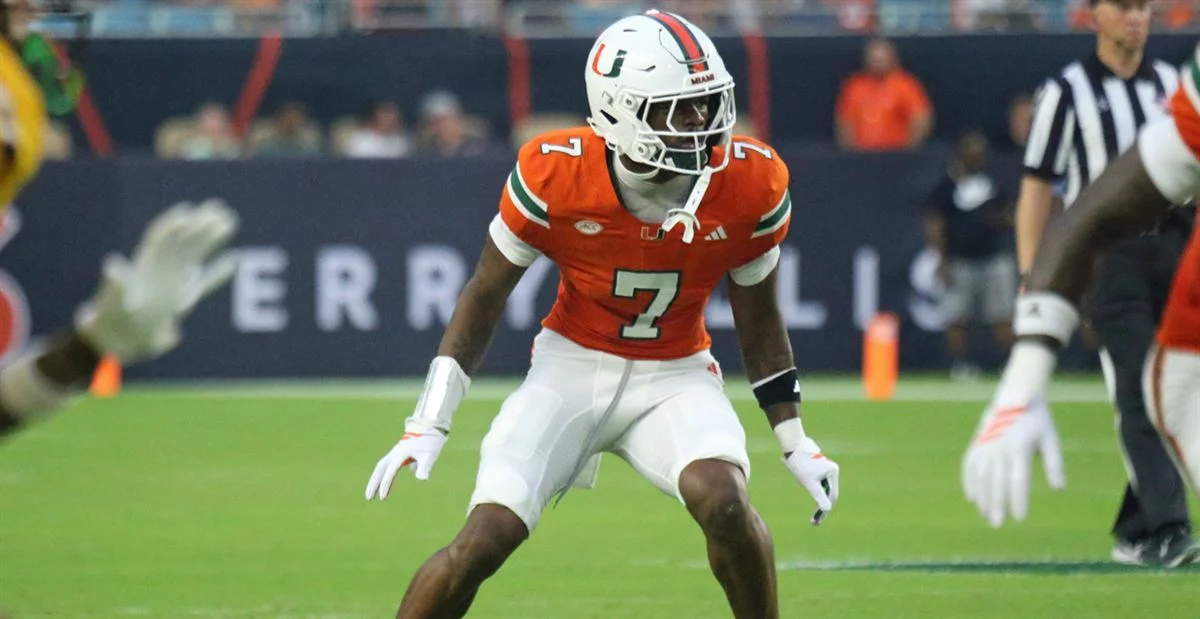
Zechariah Poyser can help Miami’s secondary most by preventing the plays talent cannot fix. A corner may win his route and a safety may have enough range, but one missed check can still leave a receiver uncovered. Communication is the difference between a difficult completion and an assignment bust that becomes six points.
Miami’s defensive backs watch film together, talk football throughout the day and have improved their communication. Christy Chirinos of Miami Athletics included Poyser’s explanation in the official camp report. He wants to become a coach on the field for younger teammates after learning from Jakobe Thomas and Keionte Scott.
The role fits a secondary with several credible options. OJ Frederique Jr., Xavier Lucas, Damari Brown, Bryce Fitzgerald, Omar Thornton and Poyser give Corey Hetherman enough pieces to vary coverages. More combinations also create more opportunities for two defenders to read the same motion differently.
Poyser’s 6-foot-2, 200-pound frame and listed defensive-back role appear on his ESPN player card. The size gives Miami flexibility, but versatility only helps if he communicates whether he is spinning down, carrying a receiver or passing a route to another defender.
Modern offenses attack uncertainty before they attack a matchup. They use motion to reveal coverage, bunch formations to create traffic and tempo to prevent defenses from substituting. A quiet secondary can have five good cover players and still lose because nobody resets the strength or confirms the new responsibility.
Poyser also praised Malachi Toney as a complete receiver who forces defenders to account for his location, Trinton Breeze of CanesInSight wrote. Those daily repetitions are useful because Toney can align outside, in the slot or in motion. Miami’s defense has to communicate against a player who makes the picture change.
The leadership should remain specific. Telling a young defender to “communicate” is not enough. Poyser has to identify the check, say it early and confirm that the player beside him heard it. Film study then has to connect the word to the formation so the call becomes automatic when the offense plays fast.
Miami’s front can reduce some pressure by forcing hurried throws. The secondary still cannot depend on the pass rush to erase every late rotation. Clemson, Florida State and Notre Dame will each find the defender who hesitates. A veteran voice can keep one moment of confusion from deciding an otherwise strong defensive series.
Poyser does not need every tackle or interception to lead the group. Some of his most valuable work will leave no individual statistic: a motion passed correctly, a freshman placed in the right leverage or a deep route covered because the safety heard the call. Miami has enough athletes. Poyser can help make sure they are all playing the same defense.
Down and distance should sharpen the language further. Third-and-long can require a different alert than first down, and red-zone spacing compresses routes until one missed exchange becomes fatal. Poyser can help the group build a small set of calls that stay clear when the situation becomes loud and fast.
Comments