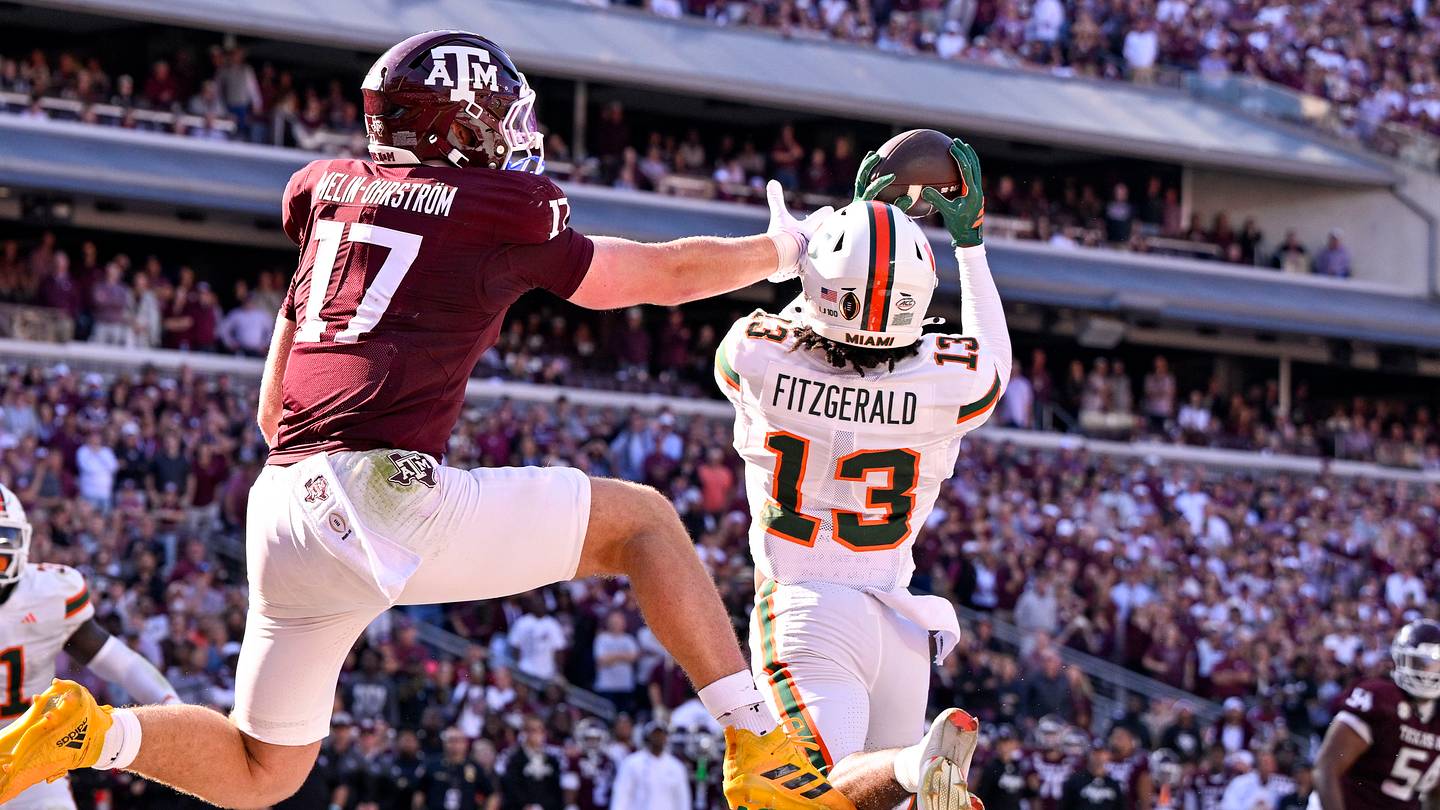
Corey Hetherman should turn Miami’s secondary versatility into a weekly disguise, using the same defensive backs to present different answers before and after the snap.
Omar Thornton said Thursday that he is comfortable playing wherever Miami places him and has learned the calls required when he switches positions. In Miami Athletics’ camp report, he also described Hetherman as a coordinator who likes to attack. The combination gives the Hurricanes a chance to pressure an offense with uncertainty before they send an extra rusher.
Daylyn Upshaw supplied the offensive view of the same problem. He said Miami can show Ethan O’Connor, OJ Frederique Jr., Damari Brown or Xavier Lucas with different techniques from one rep to the next. A receiver who cannot predict the leverage across from him needs more time to confirm the route adjustment. The half-second can help the pass rush without changing the front.
Thornton is the piece who can make the picture move. His Miami profile lists him as a defensive back rather than trapping him in one narrow label. If he can align near the slot, rotate toward safety or threaten the line of scrimmage, a quarterback must determine whether the defense is changing coverage, adding pressure or simply showing movement.
The most useful disguise does not require an exotic call every snap. Miami can show two deep safeties and rotate one defender down after the quarterback begins his cadence. It can place Thornton near the box, then ask him to carry a route while another defender attacks. It can press outside with Bryce Fitzgerald while protecting the middle differently behind him. The goal is to make familiar coverage arrive from an unfamiliar starting point.
Versatility creates a risk as well as an advantage. Every position switch changes communication. One defender must replace the vacated run fit, another must know where his help moved and the entire secondary must respond if the offense sends motion. A disguise that fools a teammate is worse than a simple coverage the opponent recognizes.
Fitzgerald’s leadership becomes important for that reason. He said Thursday that Hetherman has asked him to become more vocal and keep younger players connected. Fitzgerald’s ball production already attracts attention, and Justice Sandle of Miami Hurricanes On SI has tracked the national award recognition attached to his 2025 work. His next step is making sure Miami reaches the intended coverage before he hunts the next interception.
Hetherman should build the package in layers. The base call must be reliable with every personnel group. The first change can alter leverage without changing responsibilities. The next can bring pressure from a player who previously dropped. When several calls begin from the same shell, Miami creates uncertainty without asking the secondary to memorize a new defense every week.
The strategy can also protect individual matchups. A young corner does not have to survive the same isolated route repeatedly if a late rotation changes the quarterback’s read. Thornton can help close the vulnerable space, while Fitzgerald can align where his instincts create a takeaway chance. Interchangeability becomes valuable when it directs players toward strengths rather than moving them only for novelty.
Stanford will offer the first public test. The opener should show whether Miami can move before the snap and still tackle correctly when the offense checks to a run. More sophisticated ACC opponents will use tempo, bunch formations and motion to force the Hurricanes to declare their intentions. Communication has to survive all three.
Miami has enough names in the secondary to rotate bodies. The larger opportunity is rotating the picture. Thornton’s comfort across positions, Fitzgerald’s experience and the different techniques Upshaw sees in practice can give Hetherman an aggressive defense before the blitz arrives. If the calls stay clean, versatility will become more than depth. It will become hesitation created on purpose.
Comments