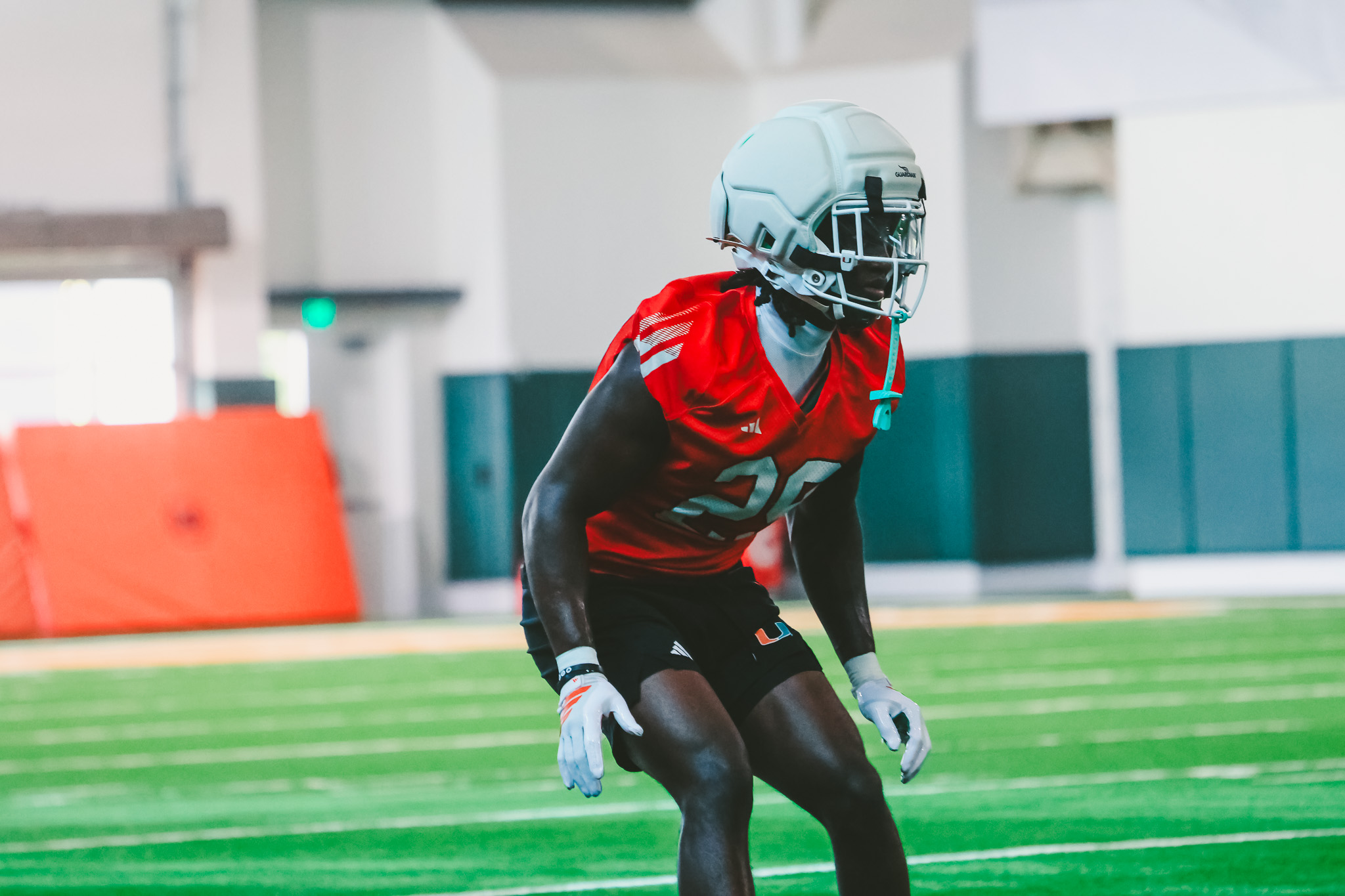
This is an analysis of how Justin Scott can help Miami replace pressure from two departed edge stars without pretending that a defensive tackle must become Rueben Bain Jr. or Akheem Mesidor.
The Hurricanes lost both edge rushers to the first round of the NFL draft. Damon Wilson II, Marquise Lightfoot and Armondo Blount will take the most visible outside snaps, but Scott can make each of their assignments easier by changing the pocket from inside.
Scott described Ahmad Moten’s influence during camp. CanesInSight’s published account of his media session quoted Scott crediting Moten with teaching him to play faster and use his speed and twitch against blockers. The lesson can become a structural answer for the entire defense.
Edge pressure works best when a quarterback cannot step forward. Scott does not need to record the sack to wreck that escape. Driving a guard or center backward shortens the launch point, forces the quarterback to reset and delivers him toward Wilson or another outside rusher.
The same interior push can reduce Miami’s need to blitz. Sending an extra defender creates pressure numbers, but it also removes a player from coverage. Corey Hetherman’s defense gains more flexibility when four rushers can force a quick decision and seven defenders can crowd the passing lanes.
Scott’s first measure should be depth, not total tackles. If his rush reaches the quarterback’s spot, an offense must slide protection, use a back inside or move the launch point. Every adjustment changes another matchup even when the stat sheet credits someone else.
Run defense remains part of the job. A tackle who flies upfield without controlling his gap can create a crease. Scott must pair his first-step quickness with enough discipline to squeeze the run before transitioning to the passer. Moten’s example gives him a veteran reference for that balance.
Moten recorded 31 tackles, nine tackles for loss and 4.5 sacks last season. Scott does not need to compete with those numbers. Playing beside Moten allows the two tackles to alternate which player attacks and which player controls the protection.
Miami should test the four-man answer before turning to heavier pressure. Stanford can reveal whether Scott and Moten compress the middle while the new edge rotation maintains its lanes. If the quarterback must throw early, the secondary gains an advantage without the defense announcing where pressure comes from.
Bain and Mesidor cannot be replaced by assigning their old sack total to one player. Their effect can be distributed. Wilson can win outside, the secondary can hold the first read and Scott can erase the quarterback’s safest step. Interior pressure gives Miami the cleanest way to make a major edge loss feel smaller.
Comments