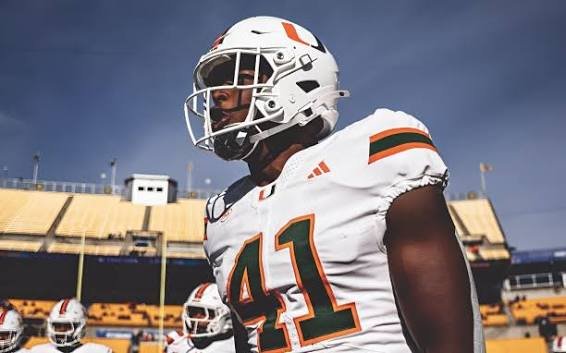
Miami linebacker Chase Smith says sophomores Ezekiel Marcelin Jr. and Kellen Wiley Jr. have made their largest progress in the mental part of the position, giving the Hurricanes two young defenders who can anticipate plays instead of only reacting to them.
Smith discussed their growth after Miami’s second preseason scrimmage in a media session detailed by Trinton Breeze of CanesInSight. He said both linebackers were always physical and athletic. The change is their ability to recognize what is coming before it happens.
The distinction can determine whether a talented reserve becomes part of a dependable rotation. Linebackers must read formations, communicate adjustments and fit the run without opening a passing lane behind them. A fast player who takes a false first step can arrive later than a slower teammate who understands the picture.
Marcelin and Wiley each gained experience as freshmen, but Smith’s assessment points to development that will not always appear in a tackle total. Correctly passing a route to a teammate, closing a cutback lane or forcing a runner toward help can make the entire defense work without producing individual credit.
Miami needs that growth behind its established veterans. A long season rarely allows the same two or three linebackers to handle every package. Opponents will spread the field, add extra blockers and increase tempo. Corey Hetherman needs combinations that can enter without reducing the defense’s ability to communicate.
Smith said a second year in Hetherman’s system has allowed defenders to communicate and get into position faster. The continuity gives the young linebackers a stable framework. Instead of learning new vocabulary and new rules, they can spend more time recognizing how an offense tries to attack those rules.
The second scrimmage supplied an important test because coaches could create game-like stress. Smith said scrimmages reveal what needs to be corrected and added that Miami still has plenty to fine-tune. His comments balanced confidence in the group’s progress with an acknowledgment that camp work is not complete.
The offense contributes to that development. Smith described Miami’s offensive line as physical and fast and invoked the idea that iron sharpens iron. Young linebackers have to read blocks against a unit capable of disguising intentions and moving defenders. Winning a practice rep starts with identifying the scheme before trying to defeat it.
Marcelin and Wiley do not need identical roles. One may help more against downhill runs, while the other earns snaps in space or on special teams. Mental growth gives the staff more freedom to match their physical strengths to specific situations.
Stanford will challenge that progress with an actual game plan and a full week of preparation. The test is not whether either sophomore makes one explosive tackle. It is whether Miami can substitute, adjust and preserve its structure when the opponent changes personnel or motion.
Smith’s comments offer no guarantee about the depth chart, and Miami has not announced a starting linebacker combination. They do identify a meaningful direction. Marcelin and Wiley are moving beyond being athletes who might help someday and toward defenders who can understand why a play is developing.
The mental leap is how a defense turns young depth into usable depth. Miami already knew both players could run and hit. Smith now sees the anticipation that can get them to the right place before those traits are required.
Comments