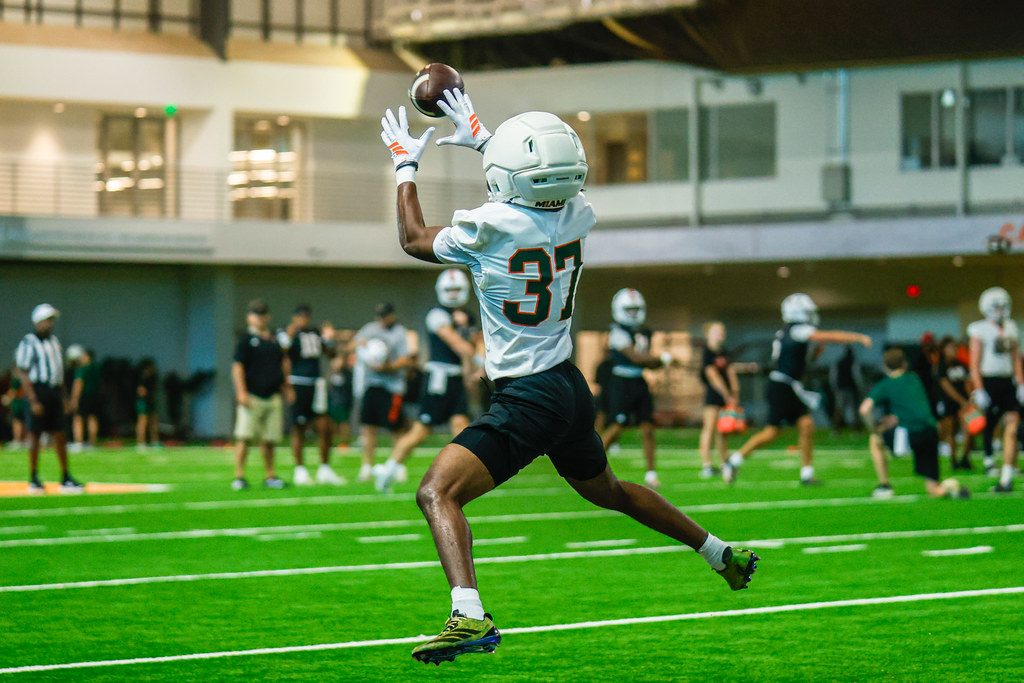
Miami put the expanded Carol Soffer Indoor Practice Facility to work during Tuesday’s first fall-camp practice, giving the football program more usable room when thunderstorms or heat force a session away from Greentree. The debut connected a major facilities project to the daily work it was built to support.
The school’s first-practice report described the facility as formally reopened and expanded. Players moved through the opening session inside the updated space before Miami begins a four-week push toward its Sept. 4 game at Stanford.
An indoor building does not win a recruiting battle or develop a player on its own. Its value appears when weather would otherwise compress a practice, split position groups or send an entire plan into a smaller area. South Florida creates those interruptions often enough for additional space to affect the quality of a season’s work.
The expansion also lets Miami keep more of a team period intact. Eleven-on-eleven football demands width, safe run-off space and enough room for coaches to see the full structure of a play. A cramped alternative can preserve conditioning and individual drills, but it cannot reproduce every read a quarterback or safety must make.
The difference matters immediately for Darian Mensah. Miami’s new quarterback needs live repetitions with an offensive line learning his cadence and receivers learning how he moves through progressions. A weather delay should not have to erase the full-speed communication that makes those pieces function together.
The defense receives the same benefit. Corey Hetherman can install pressure packages, practice coverage rotations and correct alignment problems without losing the team portion of a session. New defenders still have to execute outdoors and in stadium conditions. The indoor space protects the teaching sequence when the day’s forecast becomes the opponent.
On3’s opening-practice gallery showed Miami using the updated environment for individual and group work. The photographs make the expansion tangible: multiple position groups can operate while coaches retain clear sight lines and players have room to finish a repetition safely.
Recruiting is an unavoidable part of the facility’s value. Prospects compare training spaces, recovery resources and the daily environment they would enter. Miami can now show the project as a working part of camp rather than a rendering. The stronger message is not appearance. It is the number of quality repetitions the program can preserve across a humid season.
The facility can also support developmental groups that lose repetitions when space becomes scarce. Freshmen and reserves need full-speed work to become useful depth, and coaches need enough room to evaluate them without cutting the starters’ period short. More usable field space turns a weather contingency into a development opportunity.
Miami still has to develop its roster, manage injuries and execute when games move outdoors. The expanded indoor facility cannot replace any of those responsibilities. It can remove a recurring obstacle from the preparation calendar. Tuesday’s first use showed how the upgrade will be judged — one complete, uninterrupted practice at a time.
Comments