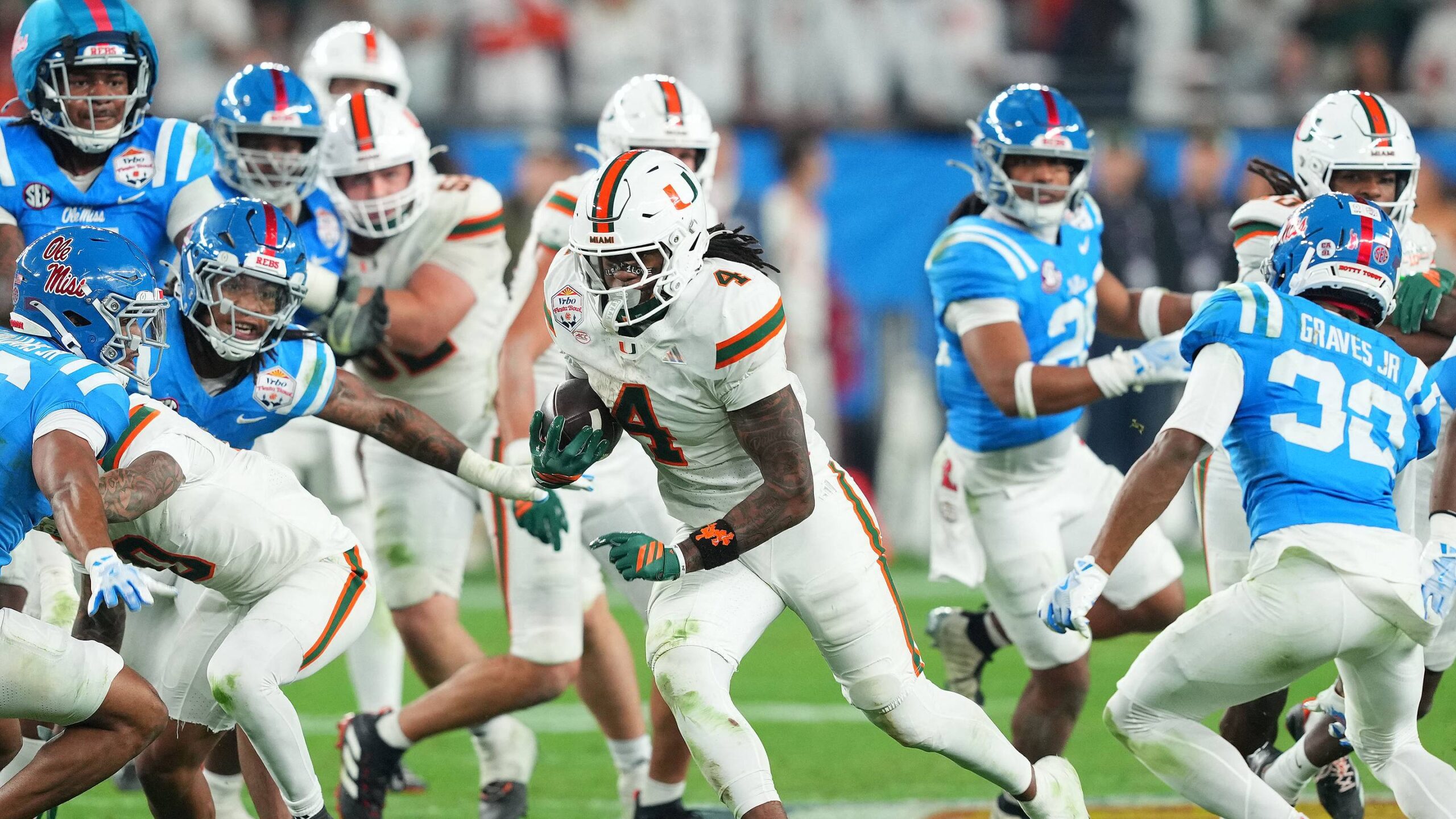
Mark Fletcher Jr. can help Miami’s defense before he carries the ball in a game. His physical running style gives a rebuilt defensive front a daily test of pad level, gap control and tackling. If the Hurricanes cannot handle Fletcher on Greentree, the warning arrives early enough to fix rather than on a September scoreboard.
Facing Fletcher in practice is not fun, and Ahmad Moten Sr. has competed against him since high school. Christy Chirinos of Miami Athletics included Moten’s assessment in the official camp report. Moten framed the matchup as a point of pride for a line that does not want any back running through it.
The pride needs structure. Practice contact is controlled, and Miami cannot spend August exposing its starting back or defenders to unnecessary punishment. The useful work comes from demanding correct fits, strong first contact and multiple hats to the ball without turning every rep into a collision contest.
Fletcher gives the defense a credible standard because he combines size, patience and finishing power. A defender who reaches with his arms will feel the mistake. A linebacker who guesses the gap will open a cutback. A safety who arrives high will learn why tackling posture matters before the same error appears against Clemson or Notre Dame.
Miami’s competitive practice battles have become a visible part of camp, according to Jordan McPherson of the Miami Herald. The offense and defense should use that energy to sharpen details, not chase a winner after every rep. Fletcher can lose a play and still give the front valuable evidence.
The line is replacing Bain and Mesidor, so its run-defense identity cannot depend on last season’s reputation. Moten, Marquise Lightfoot, Armondo Blount, Justin Scott, Damon Wilson II and Keona Davis have to build a new rotation. Fletcher can expose which combinations hold their gaps and which ones create space by attacking the same lane.
The benefit travels both ways. A disciplined front forces Fletcher to press the aiming point, read leverage and protect the football through traffic. Miami’s offense will need those habits when a defense closes the first crease. Competitive balance makes the rep useful even when nobody leaves the field celebrating.
Camp praise often centers on spectacular catches or sacks. The Fletcher-Moten battle offers something more durable. Miami can measure whether its run defense handles a veteran back with the physical profile it will face all season. If the front meets that standard in August, Fletcher’s work may show up in stops he never receives credit for.
Coaches can track the battle without turning it into a slogan. Missed tackles, yards after contact, successful fits and clean escapes from blocks reveal whether the front is improving. Fletcher’s presence makes those measurements meaningful because the defense is testing itself against a back it expects to trust in the biggest games.
Comments