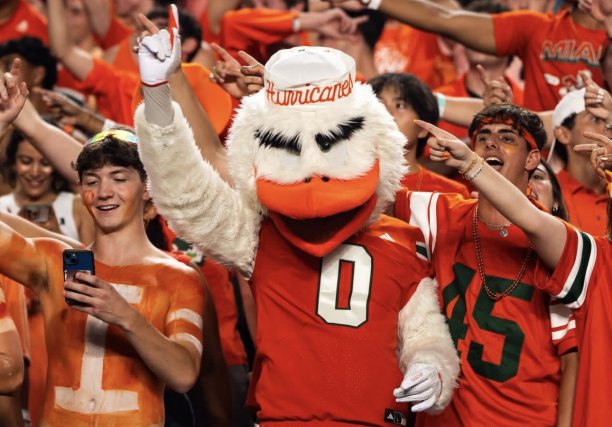
Boost Mobile became the official wireless communications sponsor of Miami Athletics on Monday through a partnership that lets customers direct part of a monthly phone bill to the Hurricanes football program.
Current and new customers can opt into the program after buying or activating eligible Boost service. The company says the allocation does not add a separate charge to the customer’s bill. Miami did not disclose the sponsorship’s total value or the exact amount attached to each participating account.
The parties introduced the arrangement in a joint Miami Athletics announcement. It designates Boost as an official sponsor and connects recurring wireless payments to football funding, student-athlete support and community activations.
The consumer side begins with an opt-in. Boost’s Miami program page says fans can choose a plan, activate service and select support for the team. The advertised options include the company’s $25 monthly plan as well as higher-priced plans with additional data and device benefits.
The partnership also includes a sweepstakes built around Miami experiences. Listed prizes include home-game tickets, suite access, parking, away-game trips, pregame field access, a Florida State tailgate, autographed merchandise and access to a football practice. Availability varies by event, and entering for a benefit is different from receiving it automatically with service.
Miami gains something more useful than another sign inside Hard Rock Stadium if the program attracts sustained participation. A monthly bill creates recurring support instead of a one-time merchandise purchase. The model also lets the athletics department measure whether fan affinity can move customers toward a sponsor and keep them there.
Fans should still judge the wireless service on price, coverage, data limits and contract terms. Team loyalty does not make a poor plan a good purchase. The partnership becomes strongest when a customer would reasonably choose Boost anyway and can then attach that existing expense to Miami.
Transparency will determine how credible the funding pitch feels. Miami and Boost should eventually make clear how the allocation is calculated, where the football money goes and whether participation produces a meaningful program total. A recurring support engine sounds powerful; readers need enough information to evaluate the engine.
The arrangement arrives while college athletics departments keep searching for revenue beyond tickets, media rights and traditional sponsorship inventory. Direct athlete payments, facilities, recruiting, travel and technology all require money. Miami is testing whether a consumer subscription can become another predictable line without asking fans for a standalone donation.
Boost also gets access to a fan base that follows the Hurricanes year-round. Stadium activations and Miami-specific prizes turn a national wireless brand into a local game-day presence. The company can judge success through new lines and customer retention, while Miami can judge it through allocated support and the quality of the fan experiences.
The concept will be measured after the launch attention fades. A partnership tied to phone bills works only if supporters opt in, understand the terms and stay satisfied with the service. Miami now has a new recurring-revenue experiment. The next useful disclosure will be how much participation actually reaches the football program.
Comments