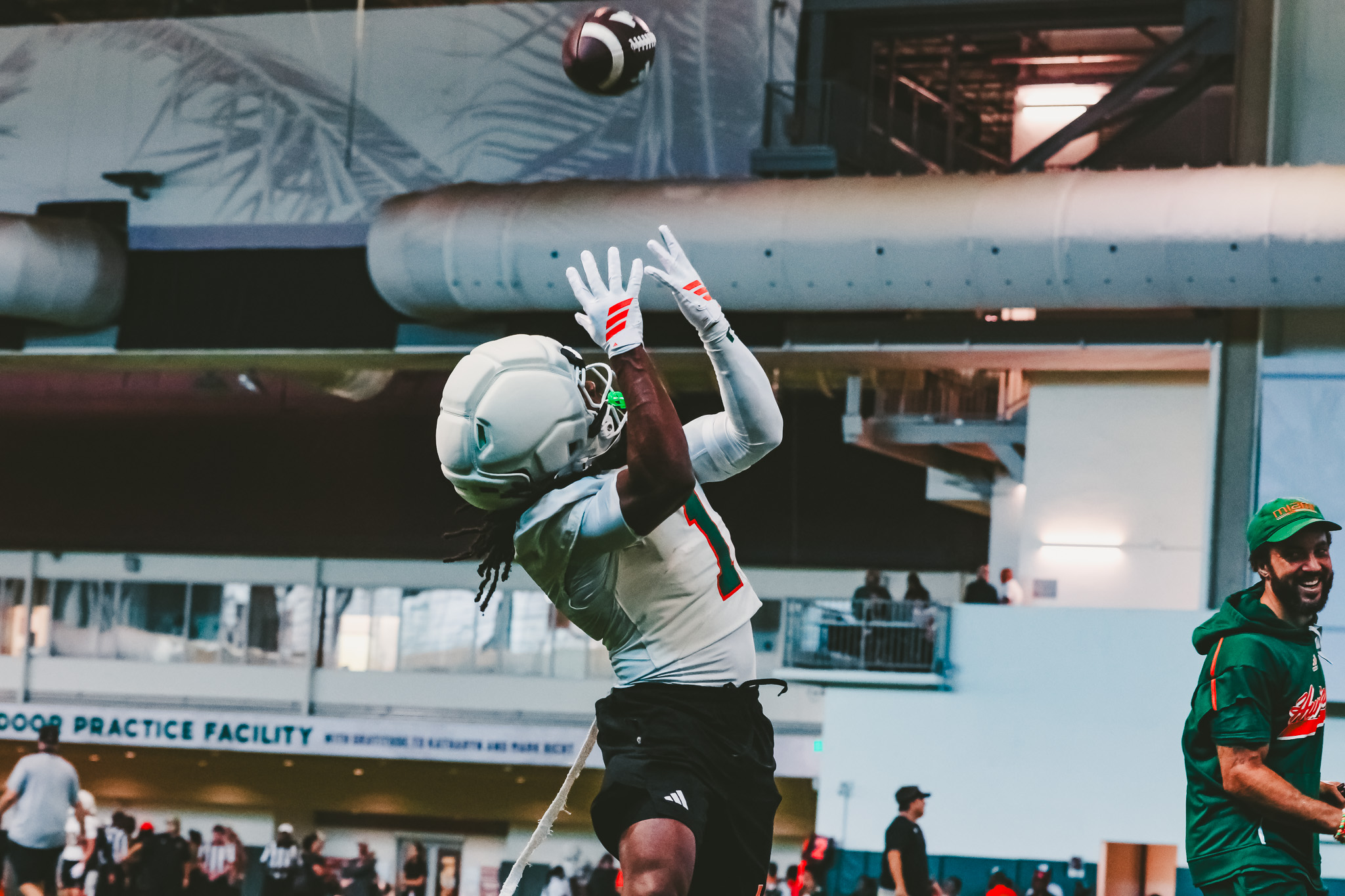
Malachi Toney was named Monday to the 2026 Paul Hornung Award preseason watch list, adding a versatility honor to the Miami receiver’s growing collection of national recognition.
The Louisville Sports Commission selected 39 players from nine Football Bowl Subdivision conferences for the watch list. Toney is one of six ACC representatives, joining California running back Adam Mohammed, Louisville receiver Tre Richardson, NC State running back Jayden Scott, Syracuse defensive back and receiver Demetres Samuel Jr. and Virginia running back Solomon Beebe.
The award honors the most versatile player in major college football. Toney fits the description because his freshman production reached four different jobs. He caught 109 passes for 1,211 yards and 10 touchdowns, ran for 113 yards and another score, produced 298 punt-return yards and completed two touchdown passes on seven attempts.
Miami announced the selection in its Monday watch-list release. Toney’s 1,622 all-purpose yards show why this recognition is different from a standard receiver honor. The Hornung Award rewards the parts of his game that force defenses and special-teams units to locate him before every snap.
The ACC’s announcement confirmed that the league placed six players on the list. The conference distribution also gives Toney several direct comparisons. He does not have to produce like every running back or two-way player. He has to keep creating value in more situations than a traditional wide receiver.
His freshman receiving total already set a Miami single-season record and led the country. Repeating that volume will be difficult because Cooper Barkate, Joshua Moore, Daylyn Upshaw and several transfers give Darian Mensah more places to throw. A deeper room could reduce Toney’s targets without reducing his effect on the offense.
Versatility gives Shannon Dawson a way to keep that effect high. Toney can motion into the backfield, take a quick touch, return a punt or throw after a defense overcommits to the run look. Each job makes the next conventional route harder to defend because opponents cannot build every alert around the same alignment.
Miami also has to use the watch list responsibly. Extra touches are useful only when they do not turn Toney into a weekly gimmick or expose him to avoidable contact. His receiving work remains the foundation. Returns, carries and passes should punish a specific defensive tendency rather than satisfy an award checklist.
The photograph from Christian Proscia’s CanesInSight camp gallery shows Toney working at his primary craft during the first practice. Route work matters because the best version of his versatility begins with a player defenses already fear as a receiver. Miami can then move him without losing the threat of a normal pass play. Return units also have to choose between directional kicks and giving Miami’s most dangerous open-field runner room to work.
The Hornung Award will choose its 2026 winner after the season and honor him at a March 2027 dinner in Louisville. Toney’s place on the first list changes nothing about Miami’s September record. It does identify the standard: the Hurricanes have one of the country’s most productive receivers, and his value can extend far beyond receptions.
Comments