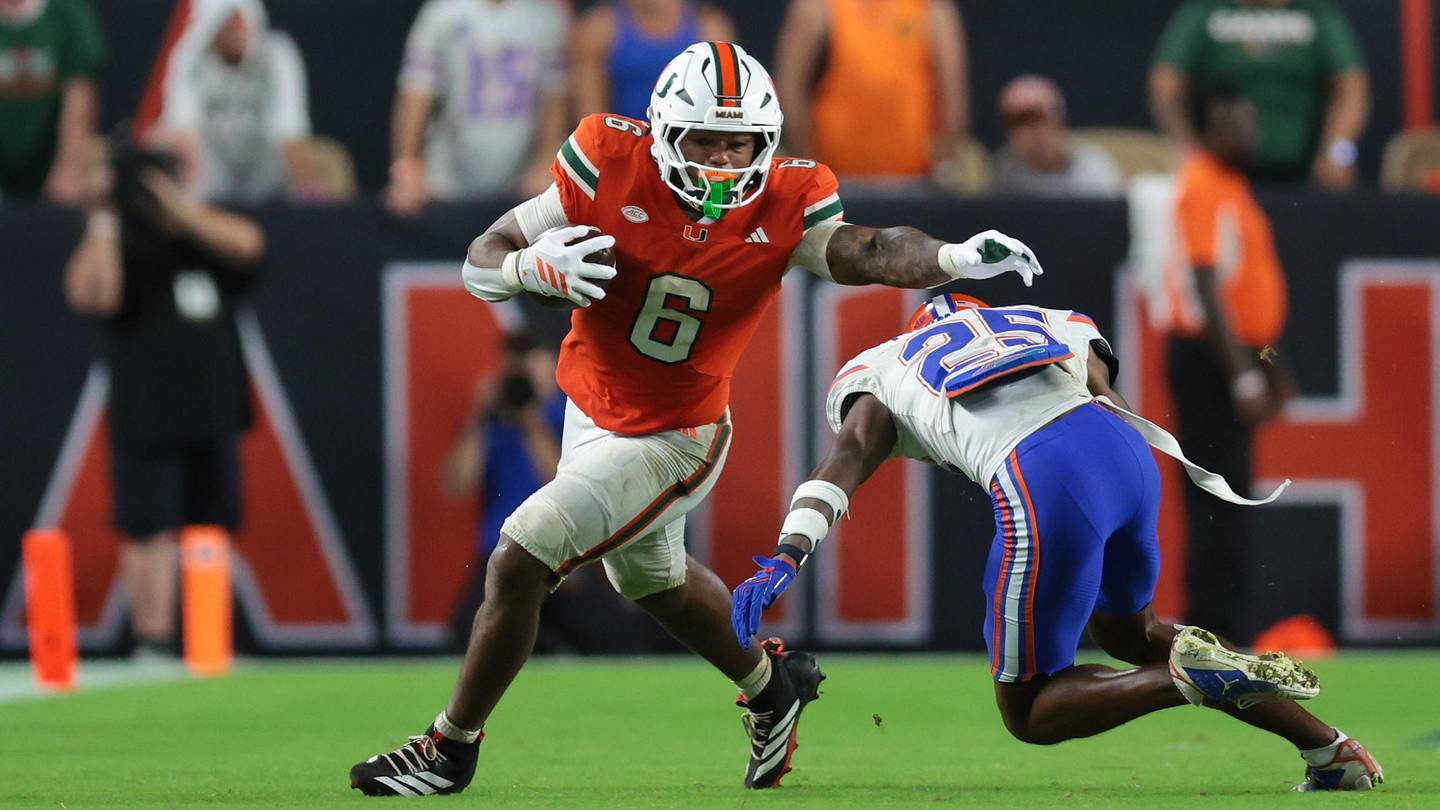
CharMar Brown gives Miami a way to protect Mark Fletcher Jr. without announcing that the offense has changed. Brown can carry the same downhill intention, which makes the second running back part of the identity instead of a pause from it.
Brown said Monday that patience and consistent preparation were his largest lessons from last season. He also described a competitive room in which each back keeps the others ready to Trinton Breeze of CanesInSight.
The comments matter because Miami cannot ask Fletcher to absorb every difficult carry from September through a possible postseason run. Fletcher is the starter and the offense’s most proven power back. Preserving his best version requires meaningful relief before fatigue or injury forces it.
Brown already proved he can supply more than empty rotation snaps. He scored important touchdowns during Miami’s 2025 run and showed enough power to finish through contact. An earlier review of the backfield highlighted his receiving value as well as his tough running, Justice Sandle of Miami Hurricanes On SI wrote.
Shannon Dawson should use Brown while the game is still being shaped. Waiting until Fletcher needs a break turns the substitution into maintenance. Giving Brown an early series or a defined set of carries makes defenses prepare for two physical backs and keeps Fletcher from accumulating every low-reward hit.
The styles are similar enough to preserve the call sheet but not identical. Fletcher can press a crease and punish the first clean tackler. Brown’s patience can let blocks develop and turn an apparently crowded run into a vertical gain. Miami can run the same concept while changing the timing a linebacker sees.
Brown also gives the offense a way to close games without wearing Fletcher down after the outcome has tilted. Four-minute possessions require ball security, pass protection and a runner willing to take three hard yards. Those snaps matter to the season even when they do not produce a highlight.
Monday’s official Miami camp report also included Brown’s praise for freshman Javian Mallory and an encouraging update on Jordan Lyle’s explosiveness. The room has enough talent to assign jobs instead of treating every reserve as the same backup.
Lyle’s speed and Mallory’s upside can create change-of-pace touches. Brown’s value is different: he lets Miami stay physical. A defense should not get lighter personnel or a simpler box count merely because Fletcher leaves the field. The offensive line can keep its preferred combinations on the field instead of relearning the run menu for a reserve.
Pass protection will decide how far the role expands. Mensah cannot lose a trusted protection answer when Miami rotates backs. Brown needs to identify pressure, step into contact and release at the correct time. A dependable third-down block can save Fletcher as effectively as five substitute carries.
Miami reached the national championship game with a demanding schedule and expects another long season. Fletcher should remain the centerpiece, but a centerpiece does not need every touch. Brown can make workload management aggressive: keep the same run concepts, challenge the same defenders and send a fresh power back into the fourth quarter.
Comments