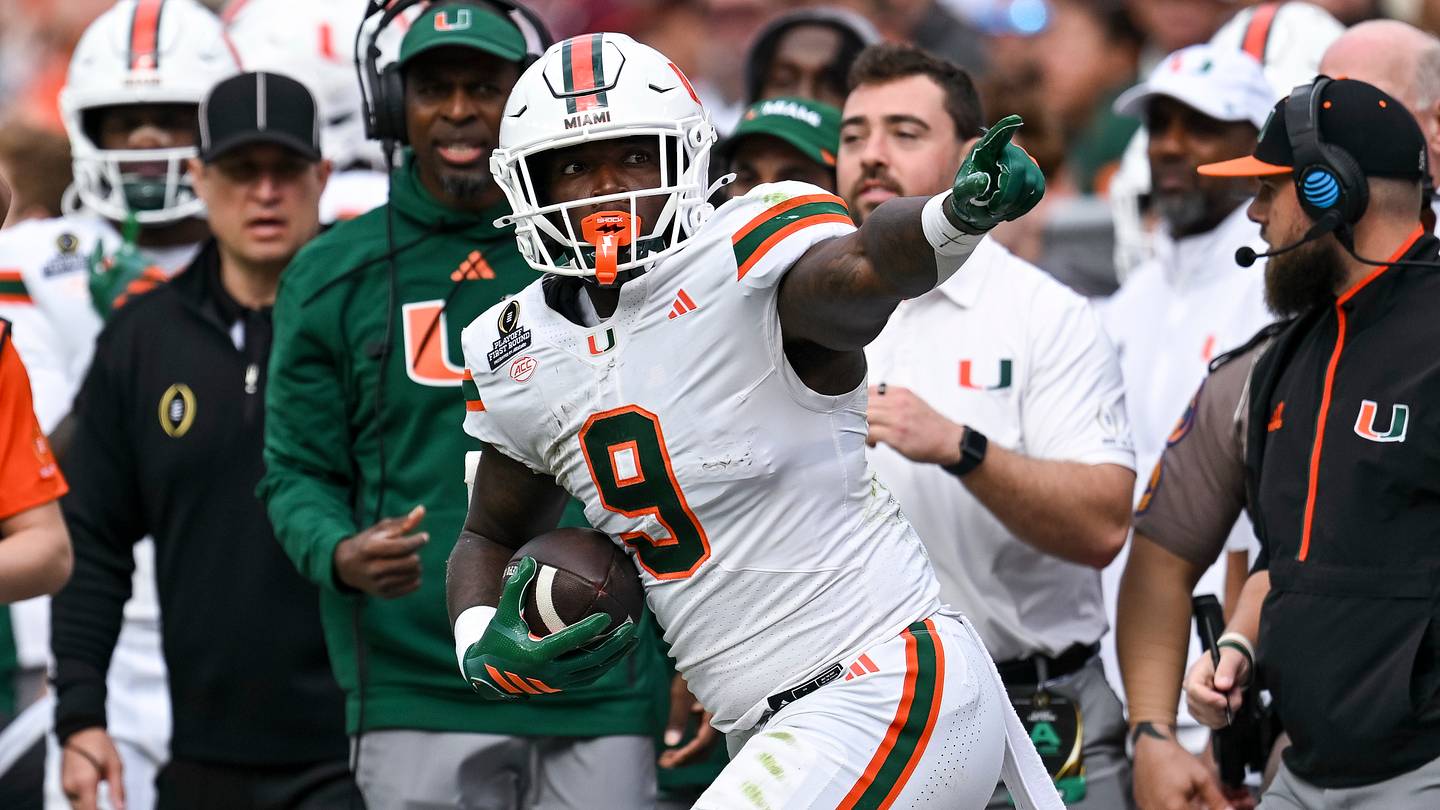
Elija Lofton named five younger Miami tight ends who are ready to compete, but his most important August job is making sure readiness means more than catching a pass in practice. Luka Gilbert’s season-long absence turned Lofton into the room’s teacher as well as its best established target.
Lofton identified Gavin Mueller, Israel Briggs, Owen Ruskavich, Jack Nickel and Jackson Carver when he discussed the group after Monday’s practice. Mueller and Briggs are like little brothers to Lofton, who wants to pass along what older Hurricanes taught him, according to Christy Chirinos of Miami Athletics.
The list gives position coach Mike Viti options. It does not give Miami five proven replacements. Young tight ends must learn where to align, when to adjust a route, how to communicate a protection and how to block a defender who may outweigh or outrun them. One missed detail can erase a formation’s advantage.
Lofton’s experience lets Miami teach those jobs through a player who performs them. He can show Briggs how much depth a route needs against zone coverage, help Mueller recognize the leverage of an edge defender and explain when motion changes the protection. A coach’s instruction becomes easier to understand when the veteran beside a freshman executes it on the next rep.
Miami still needs Lofton to produce. Mario Cristobal said the program expects a big year now that the tight end has returned to optimal form, Justice Sandle of Miami Hurricanes On SI wrote after ACC Kickoff. Darian Mensah’s willingness to work the middle of the field should create opportunities that were inconsistent last season.
The healthiest plan will not ask Lofton to take every meaningful snap. A tight end who runs routes, blocks defensive ends and contributes on special teams absorbs repeated contact. Developing one younger option for attached blocking and another for movement or receiving work can protect Lofton without shrinking Shannon Dawson’s playbook.
Briggs may offer the quickest receiving path, while Mueller’s transition from defense gives him a different physical base. Ruskavich, Nickel and Carver can force the staff to define what each does well instead of searching for a duplicate of Gilbert. The room becomes deeper when the roles complement each other.
Lofton has to lead without becoming the only answer. His own career has included injuries, including the one that kept him out of the national championship game. Miami cannot build every two-tight end package around the assumption that one body will remain available for the entire schedule.
The Stanford opener supplies a useful deadline. The Cardinal should see enough formations to make Miami’s personnel meaningful. If every tight end enters only for one obvious job, the substitution tells the defense what is coming. A younger player who can block and release into a route keeps the offense unpredictable.
Viti will make the lineup decisions, and Lofton must earn his own snaps every day. His mentoring still changes the speed of the room’s development. Miami lost one season-long option before the opener. Lofton can keep the injury from becoming a season-long limitation by making sure at least two of the five younger names can handle complete assignments.
Comments