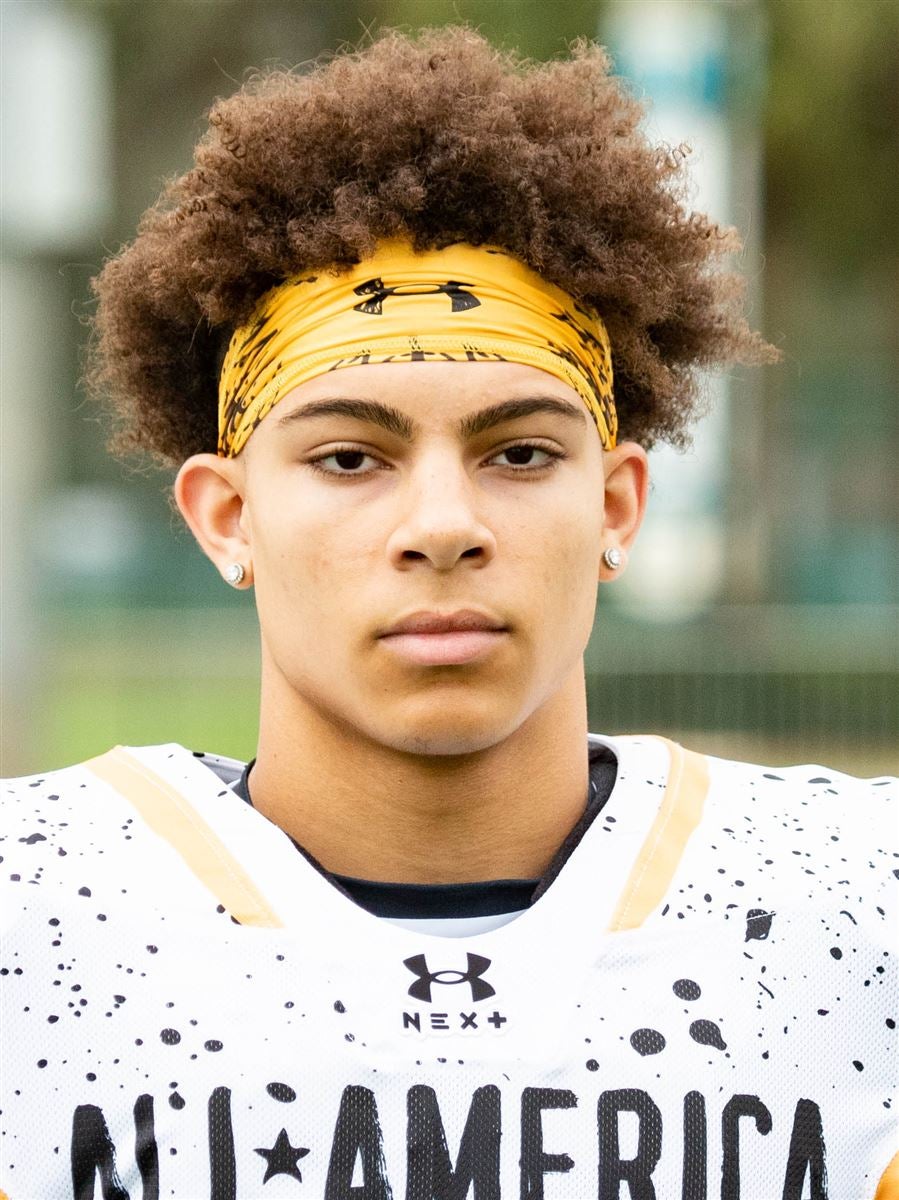
JJ Dunnigan does not need to win an every-down job to change Miami’s defense. The freshman’s cleanest early role is becoming the defender Corey Hetherman trusts to erase a third-down matchup.
This is a projection based on Dunnigan’s skill set and Miami’s needs, not a report that the staff has awarded him a package. Corey Long of Canes Warning identified the four-star freshman as a candidate for a rotational safety or nickel role. Veteran defensive back Bryce Fitzgerald called Dunnigan a hidden gem and praised his speed during a public Miami media session.
Speed alone is not the role. Third down forces a defense to handle the widest menu of offensive answers: a slot receiver crossing the field, a running back releasing from the backfield, a tight end finding space behind a linebacker or a quarterback escaping after the coverage wins.
Dunnigan can help if Miami narrows his first assignment. Instead of asking him to make every safety check for an entire game, Hetherman can deploy him against a defined personnel group and give him one matchup or one zone responsibility. The limited menu allows his acceleration to matter before experience catches up.
At 6-foot-2 and 185 pounds on his 247Sports profile, Dunnigan has the length to challenge a catch point without carrying the frame of a traditional box safety. Miami can use that range against slots and backs, particularly when an offense tries to isolate a slower defender in space.
The third-down role also protects the rest of the coverage. If Dunnigan can stay attached to a motion receiver, Miami does not have to reveal a zone rotation early. If he handles a back one-on-one, a linebacker can rush or help inside. One trustworthy matchup creates options for the other 10 defenders.
The largest risk is communication. Offenses use motion and condensed formations to force young defensive backs into late decisions. Dunnigan must know when to travel with a receiver, when to pass him across the formation and where his help will appear. Arriving fast at the wrong assignment only creates a larger opening.
Miami can reduce that risk through repetition and situation. Give Dunnigan a package with consistent rules, then expand it only after he executes the original version. A few successful snaps against Stanford would matter more than placing him on the field for 40 plays before he owns the details.
Tackling will determine whether the package survives. Third-down coverage does not end when the pass is caught short of the marker. Dunnigan must close under control and prevent a receiver from turning a routine completion into a conversion.
Special teams offer another route to trust. Coverage work tests speed, leverage and open-field tackling without requiring every secondary call. A freshman who proves dependable there makes it easier for coaches to believe he can handle a defensive package.
Fitzgerald’s praise raises the possibility, but it does not settle the depth chart. Dunnigan still has to earn snaps from older players and show that practice speed becomes assignment discipline in games.
Miami does not need him to become a star immediately. It needs one answer when an offense tries to create its best third-down matchup. If Dunnigan can erase that target and tackle cleanly, a focused package can become his first meaningful college role.
Comments